FMC Laboratory Equipment
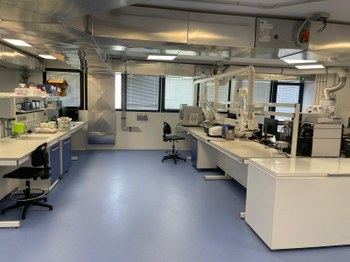
The laboratories are equipped with a wide range of scientific instrumentation that supports research, method development, and analytical activities across various fields of environmental, biological, and chemical sciences. The available equipment enables the entire experimental workflow to be carried out, from sample preparation to advanced instrumental analysis.
Basic Instrumentation
The laboratories are equipped with the main instruments required for routine experimental activities, including:
- Laminar flow hoods for operations under sterile conditions
- Chemical fume hoods for the safe handling of reagents and solvents
- High-temperature dry block incubator
- Dry block incubator
- Refrigerated, thermostatic, and rocking dry block incubator
- Drying oven
- Transilluminator
- Vortex mixers
- Vibrating plate
- Liquid filtration system with vacuum pump and filtration manifold
- pH meter
- Multiparameter probe for the determination of various physicochemical parameters
- Automatic titrator for alkalinity determination
- Precision balance
- Analytical balance
- Hotplate magnetic stirrers
- Refrigerated microcentrifuge
- Centrifuge for 15 and 50 mL tubes
- Refrigerated centrifuge for 15 and 50 mL tubes
- Modular system for the production of deionized and ultrapure water
- Ultrasonic bath
- Thermostatic water bath
- Thermostatic shaking water bath
- Large-volume climate chamber for the cultivation of bacteria, algae, and other organisms
- −80°C ultra-low temperature freezer
- Spectrofluorometer for cuvettes
- UV–Vis spectrophotometer for cuvettes
- Microvolume spectrophotometer (NanoDrop)
- Microvolume fluorometer (Qubit)
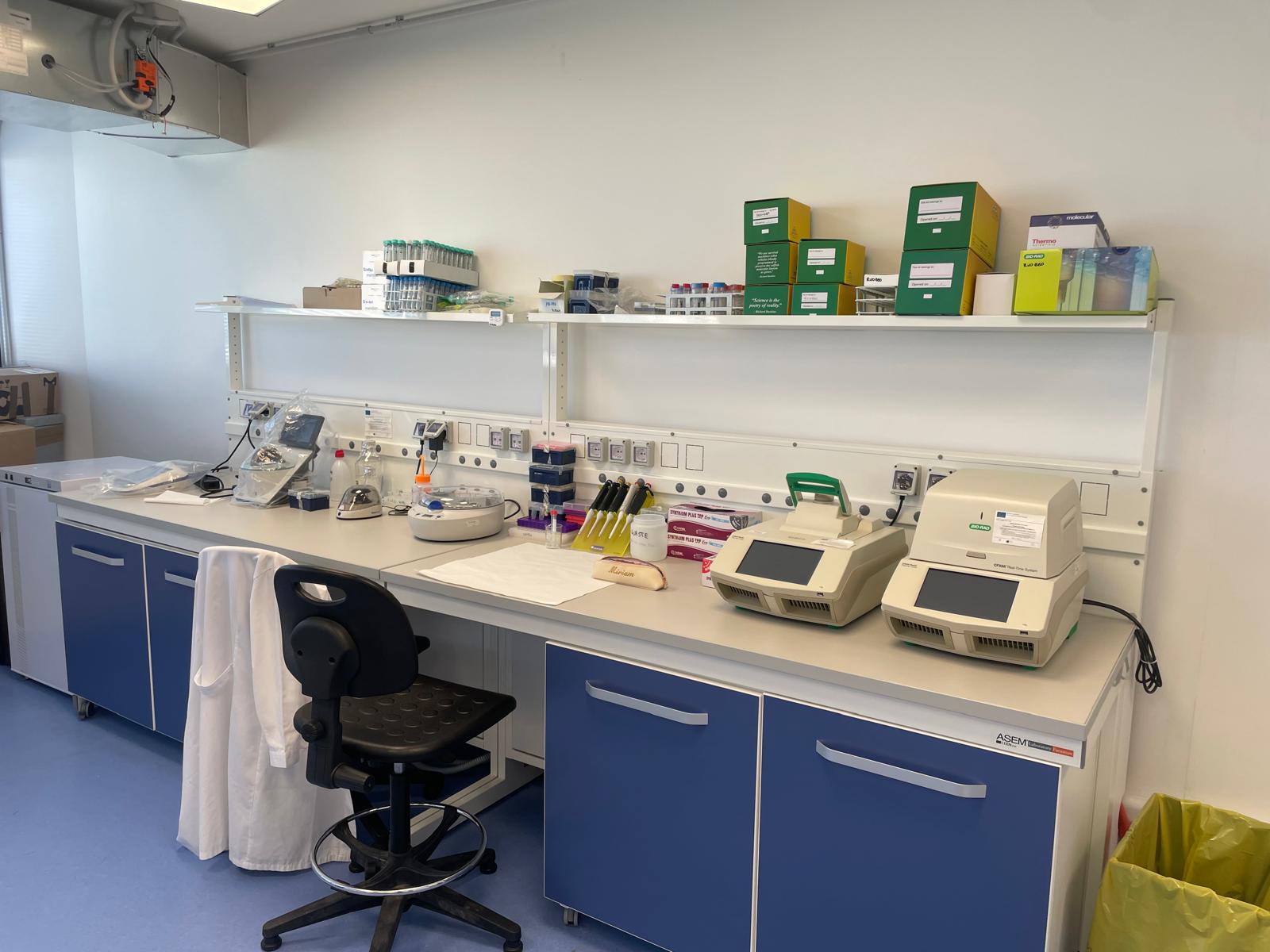
- Thermal cyclers
- Microwave digestion system for sample preparation
- Bright-field and dark-field microscopes
- Stereomicroscopes
Advanced Instrumentation
The laboratories are also equipped with advanced analytical instrumentation dedicated to the characterization of materials and environmental and biological matrices.
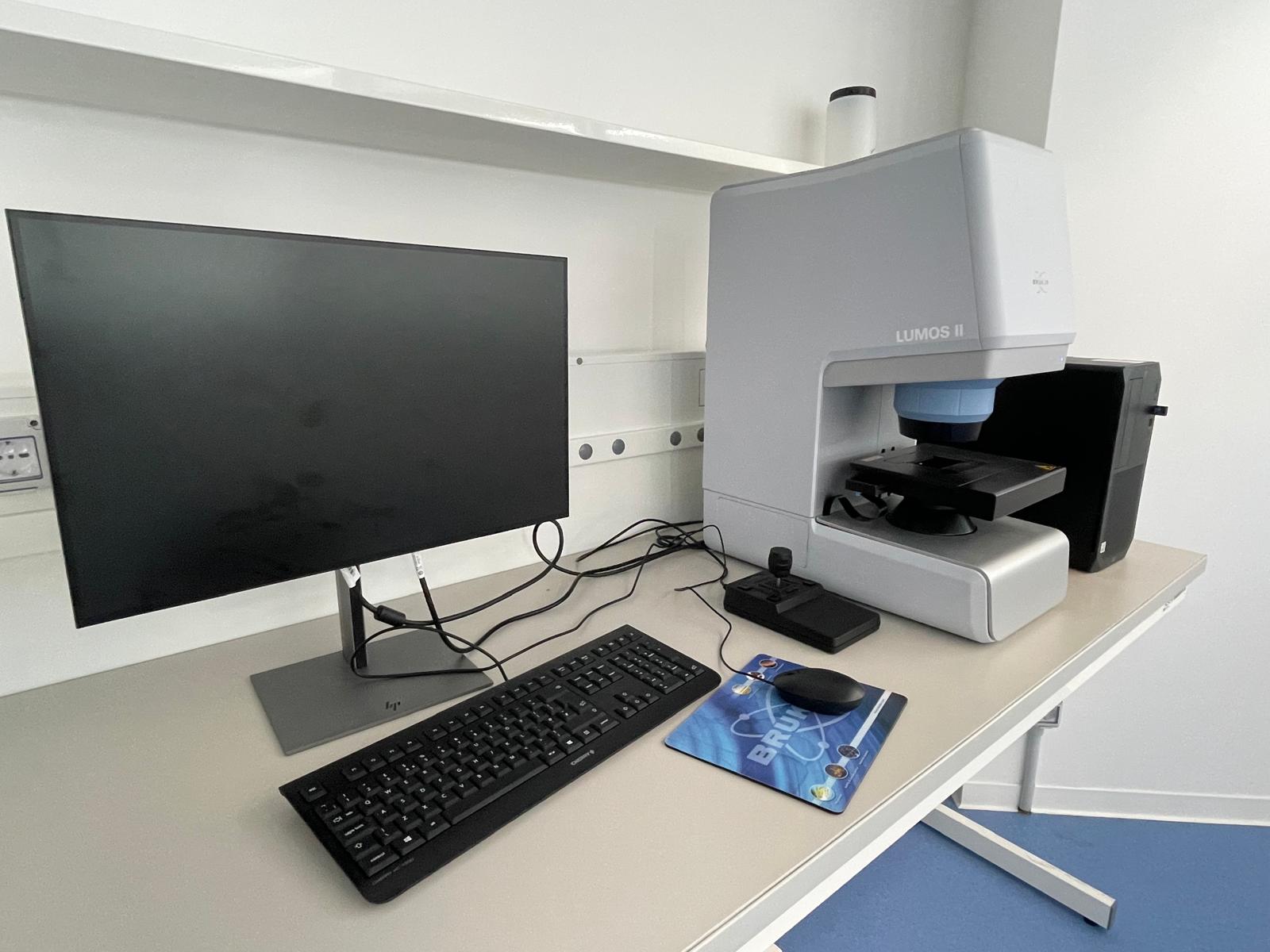
FTIR Microscope – Bruker LUMOS II
It combines optical microscopy with Fourier Transform Infrared (FTIR) spectroscopy, enabling the chemical characterization of a wide range of materials with high spatial resolution. The instrument performs non-destructive analyses in ATR, reflectance, and transmission modes, with automated image acquisition and chemical mapping of the distribution of compounds within the sample.
Main Applications:
- Identification and characterization of microplastics
- Analysis of polymers, synthetic fibers, and composite materials
- Characterization of biomaterials, biological matrices, and materials of biotechnological interest
- Investigation of sediments, particulate matter, and environmental matrices
- Analysis of solid contaminants and suspended particles
- Chemical mapping of the distribution of functional groups within heterogeneous samples
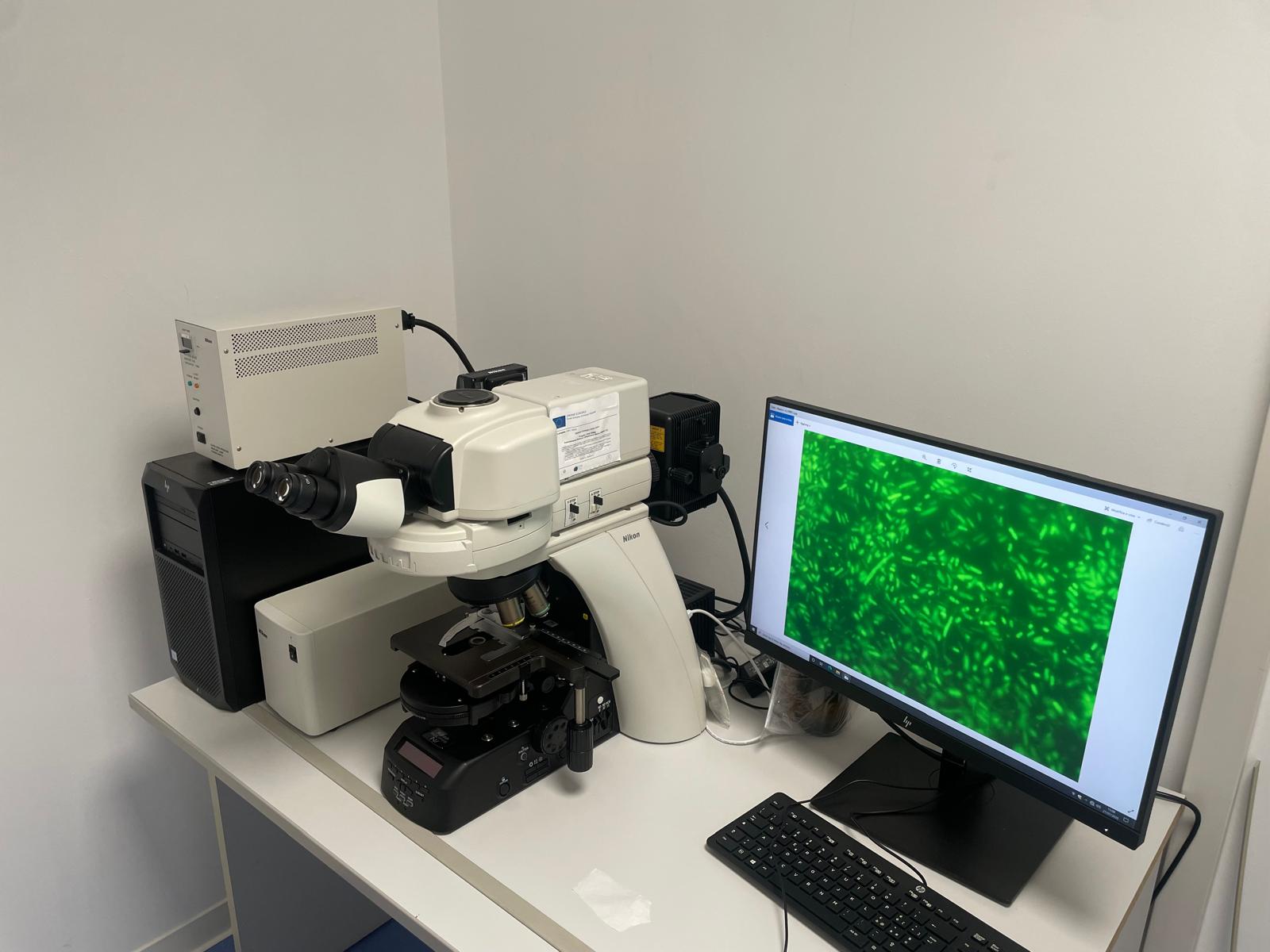
Epifluorescence Microscope – Nikon Eclipse Ni
Advanced microscope for transmitted light and epifluorescence applications. The system is particularly suited for the observation of biological and environmental samples, both in bright-field mode and using fluorescent markers or natural autofluorescence. The microscope is equipped with a digital imaging system for image acquisition, documentation, and analysis.
Main Applications:
- Observation and identification of bacteria, microalgae, phytoplankton, and other microorganisms
- Cell counting and analysis of microbial community structure
- Assessment of cell viability using fluorochromes
- Investigation of biofilms and biological matrices
- Analysis of the natural autofluorescence of photosynthetic pigments
- Image acquisition for scientific documentation and research activities
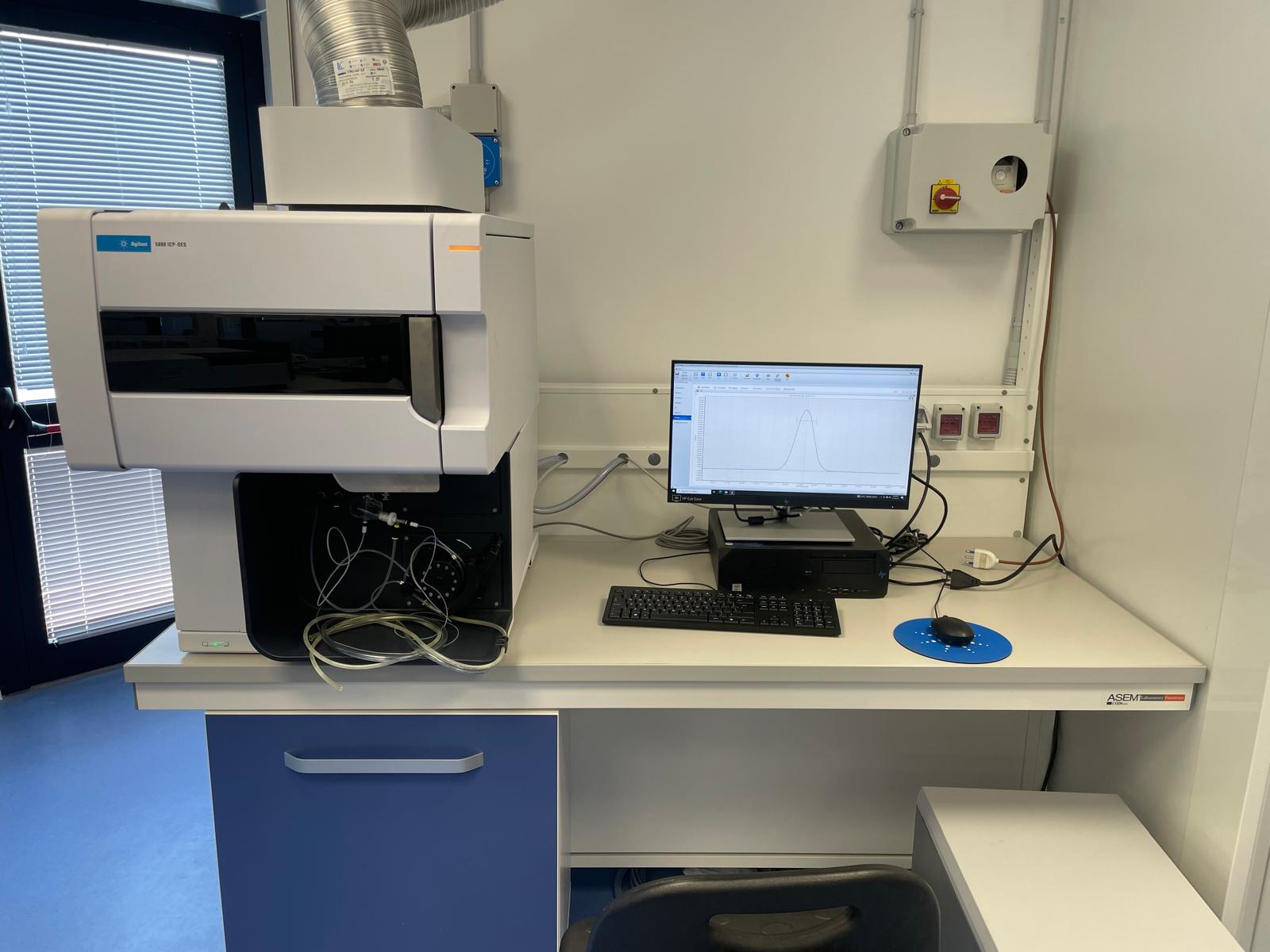
ICP-OES – Agilent 5800
Inductively Coupled Plasma Optical Emission Spectrometer dedicated to the quantitative multi-element analysis of environmental and biological matrices. The instrument enables the simultaneous determination of metals, metalloids, and non-metals over a wide concentration range, including in complex matrices.
Main Applications:
- Determination of the elemental composition of water, sediments, and soils
- Analysis of biomass, algal cultures, and biological samples
- Quantification of metals and other elements in food matrices
- Environmental quality monitoring
- Bioaccumulation and trace element contamination studies
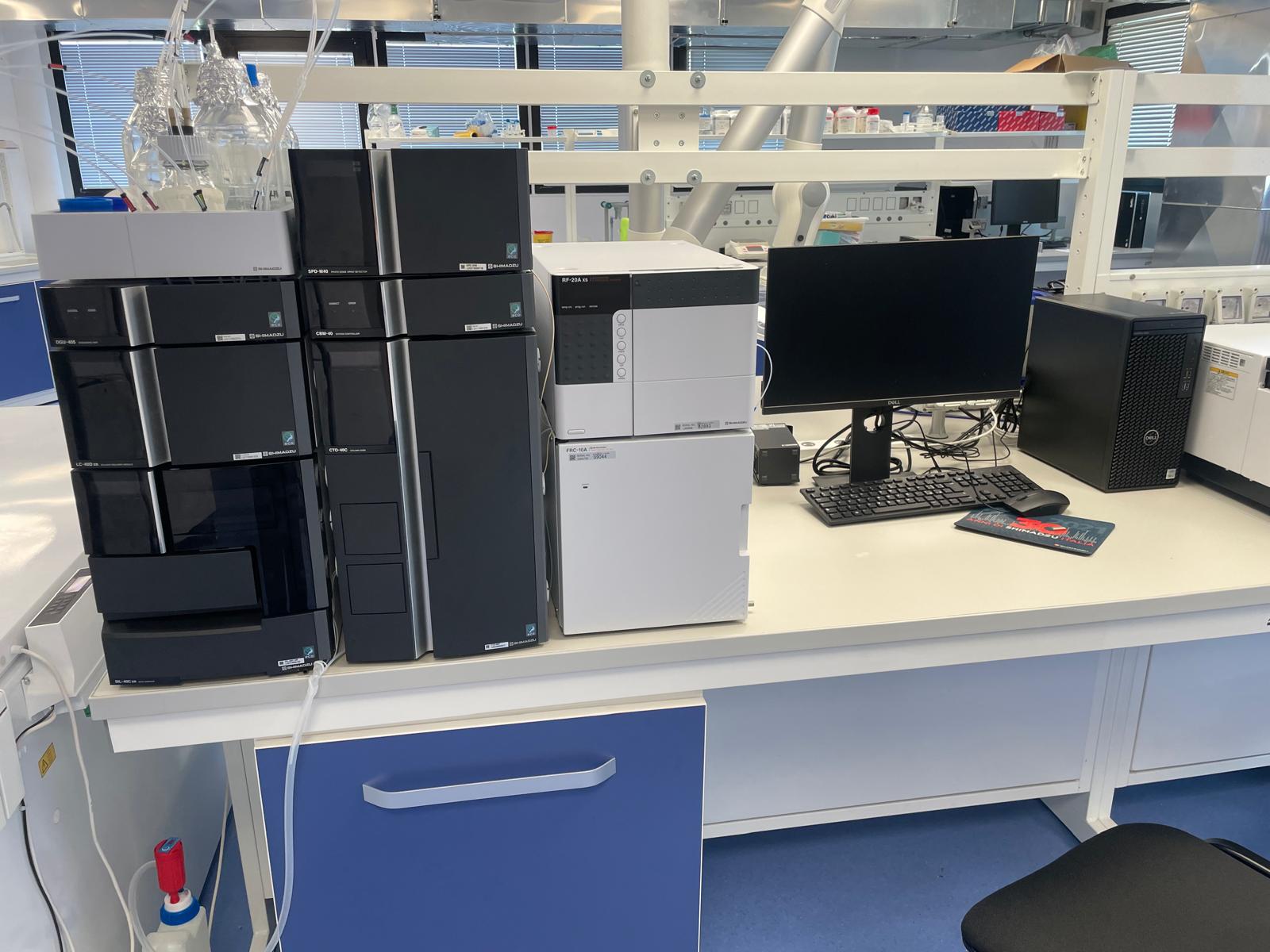
HPLC – Shimadzu Nexera Series
High-Performance Liquid Chromatography system dedicated to the separation, identification, and quantification of organic compounds in environmental and biological matrices. The instrument supports analytical method development and research activities requiring the determination of molecules in complex mixtures.
Main Applications:
- Qualitative and quantitative analysis of organic compounds
- Determination of photosynthetic pigments, vitamins, and metabolites
- Analysis of amino acids and other bioactive compounds
- Investigation of organic contaminants and degradation products
- Characterization of natural extracts and biological and environmental matrices
- Support for the development and validation of analytical methods
- Characterization and purification of compounds of commercial and biotechnological interest